Boosting the Signal

I’m so grateful to Angela Korra’ti for hosting me today as part of her Boosting the Signal series so that Parker can send (or not send) a memo. If you’ve read the book, he would have drafted this little extra after the meeting in chapter 3.

If you haven’t, it’s a little insight to the snippy, sexy relationship between an arrogant, cynical congressional aide and an idealistic, vulnerable labor organizer. (ETA: for newbies, Millie and Parker meet, she hits on him, he turns her down, and, then, as tends to happen in Washington, she ends up in his office for a meeting. Sparks fly. The memo extra is an attempt to tamp that down–though of course it won’t work.)

For more information about Special Interests, including the first chapter, look here. And for information about book 2–which features their friends Alyse and Liam and a seedy money-laundering scandal–check out Private Politics.

Baby, You’re So Classic

I’ve been thinking some about the Dear Author essay this week–which tends to be one of the highlights of my Tuesday–which asked what makes a romance endure.

I commented there, but I have a few more random thoughts after the break.

Continue reading “Baby, You’re So Classic”

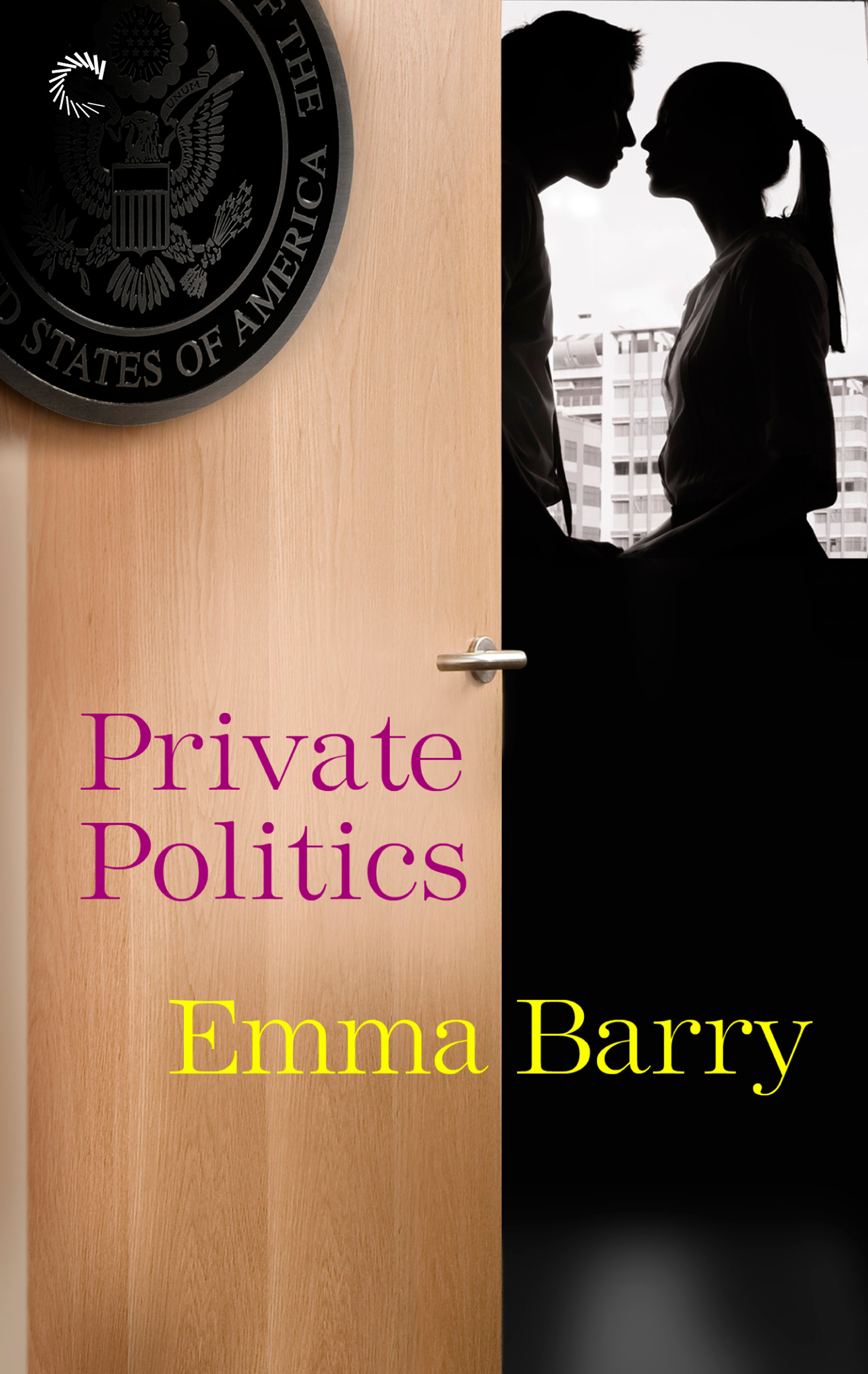
Private Politics: Cover Reveal

Less than two weeks ago, I finished writing the final book in The Easy Part series. I’m still promoting Special Interests (and to everyone who has reviewed the book or said nice things and mixed things about it–thank you!). And in less than 3 months, Private Politics will be out.

That’s right: on September 8, the second book in the series can be yours.

Do you want to see the cover?

Private Politics Cover


I don’t have the final blurb yet–sorry!–but there are some minor spoilers on the book’s Pinterest board. (ETA: here’s the log line: A non-profit fundraiser needs help dealing with a scandal from a political blogger, but as their hearts and ambitions collide, they find out that everything in Washington comes with a price.)

I adore Millie and Parker from Special Interests. Their story, and the experience of writing that book, were so important to me. But Alyse and Liam are delightful. I love them and I hope you will too.

You can pre-order Private Politics on Amazon and Kobo and add it to your Goodreads shelves. In the meantime, I’ll be here. Staring.

Random Thought

I’ve seen several charity anthologies or boxed set recently, such as this one benefitting RAINN and this one raising money for juvenile diabetes research. These are lovely projects and reflect incredible generosity and hard work from everyone involved.

But I have a suggestion: the organizers for the next charity anthology should recruit a bunch of very famous authors, put their names on the cover but publish the stories (or novellas or whatever) unsigned.

The speculation about who wrote what would be intense. Additionally, the pseudo-anonymity might push the authors involved to write outside of their usual style, which might be interesting for everyone involved. It would only work if the authors were all very high-profile and had very distinct voices, but the hook might lead the project to be super successful.

Just a thought.

Odds and Ends, Part II

First things first, the Sizzling Summer Reads Event is under way at The Romance Reviews! Literally dozens of prizes are up for grabs including books and gift cards–and this week, one of those prizes is an e-copy of Special Interests. One of the questions for the game today is related to Special Interests and if you read my blog, I’m certain you know the answer. So go forth and enter!

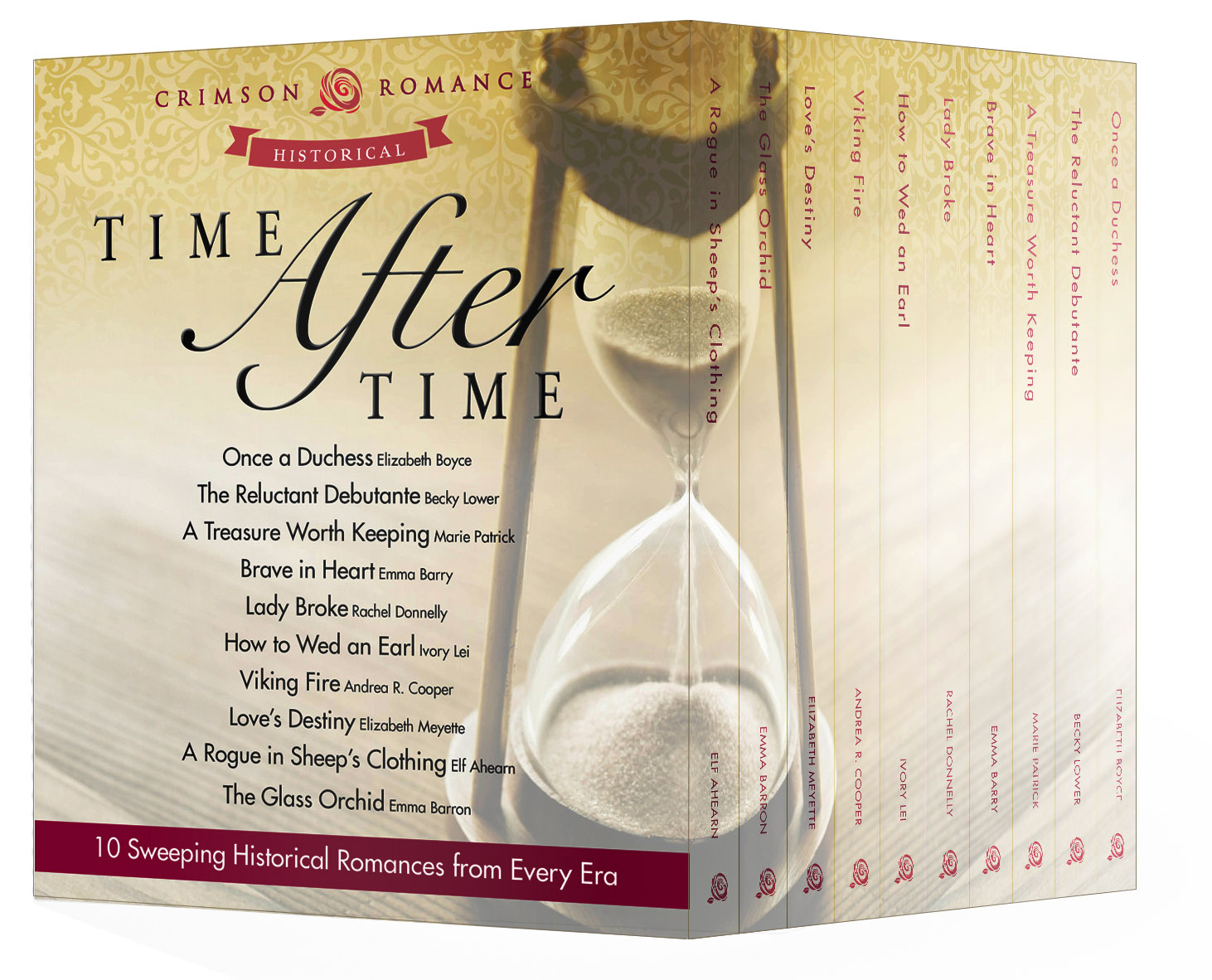
Next, I will soon be available in a box. Specifically this box.

time after time cover

My American Civil War-set historical romance Brave in Heart is one of ten (10!) books in this bundle from Crimson Romance. It will be available starting on July 7 for the amazing cost of 99 cents. Brave in Heart has never been available at that price, let alone with nine other books. If you’ve been waiting to buy it, that would be time.

I don’t have any pre-order links yet, but I will post them when I have ’em. (ETA: you can add the collection on Goodreads.)

Things That Make Me Happy…

…include finishing books.

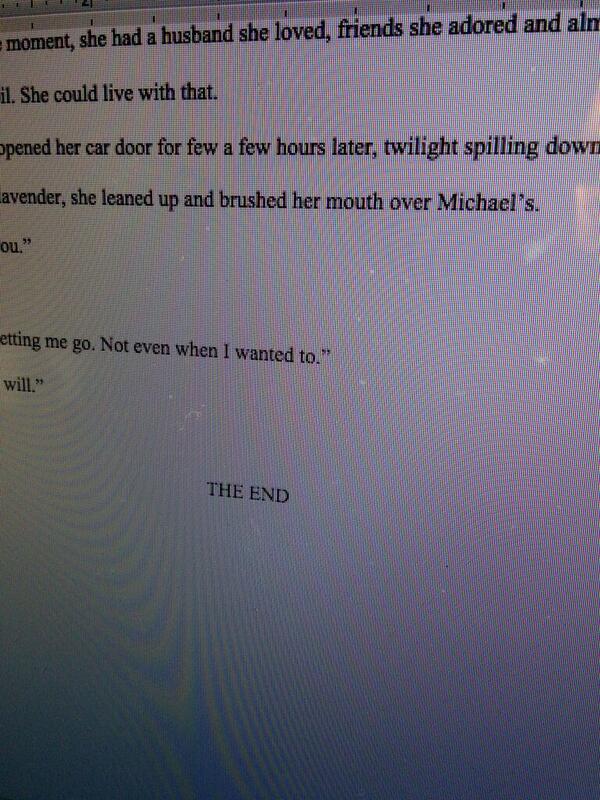
Party Lines The End

Last week, I typed the words “the end” on the third book in The Easy Part series. Last night, I connected the dots and truly tied all the pieces of the manuscript together. It (Party Lines) still needs a massive amount of work, but there is a finished first draft. (ETA: for tiny spoilers, here’s the Pinterest board for the book.)

It’s the fifth book I’ve completed but the first time I’ve finished a series. There was a moment in the spring when I was promoting Special Interests, editing Private Politics, and writing Party Lines, and for the first time, I felt like an author and not merely someone who dabbles with words.

I have more thoughts about that, and about how I write, but, given the number of words I produced in the last week, I’m going to retreat to my cave and catch up on some sleep before my next deadline.


Writerly Ethos

I am a heroine-centric reader and writer. My heroines tend to be a bit of a mess, but they are all finding their way out of the mess. I tend to catch them on the journey down into the valley, so to speak. While my heroines may be in the process of becoming, regardless of what stage of life they’re at, they all have agency. I feel more sympathy and understanding for them, which may lead me to paint them in watercolor.

I write heroes who are really into their heroines, often from quite early on in the narrative. I’m not interested in aloof, mysterious heroes who may or may not be open to love. Sometimes my heroes pretend to be that guy, but they are desperate for her. I write heroes who in the process of falling love, learn about their vulnerability and how to share with at least one other person their exposed heart.

I write settings that feel like characters, because I think people are shaped by place and history. I am more interested in how, why and where than what; plot doesn’t drive my stories.

I like books, music, art and politics and my characters do too. I’m not writing autobiography, but if two characters fight about Dickens, that’s shorthand for the differences between them.

If I am writing it, there will almost always be a scene where two people walk around in the dark and say things they wouldn’t during the day. There will almost always be exchanged written words: letters, texts, emails. There will always be kissing.

For my characters, love is hope. Love is optimism. Love is a talisman against all the bad they see in the world.

Sometimes writing romance in our world feels added on. Unnecessary. But when I remember why I write, I know there is nothing extra about it.

Once More With Feeling

I read part of Finnegan’s Wake on a dare and you guys, literary fiction is such an execrable waste of paper and ink. I don’t know anything about that James Joyce guy, but he was obviously a pervert and he lacks a basic command of English conventions and grammar–indeed some of it wasn’t even in English. The part I read was simultaneously puerile and pretentious. There didn’t seem to be a story or narrative at all. It was a collection of words and sounds–crappy ones at that. An infinite number of monkeys working on an infinite number of typewriters could have produced Finnegan’s Wake. In fact, I’m pretty sure they did. That anyone reads it at all is Joyce’s cosmic joke on English departments.

I’m guessing if I sent an essay with that thesis to William Giraldi, whose meditation on 50 Shades of Grey graces The New Republic today, he’d object. He’d probably say something like, “You’re missing the point of Finnegan’s Wake. Finnegan’s Wake is absurd and avante-garde; it is the leading edge of experimental Modernism. It must be read in the context of Joyce’s other works, as the final flowering of the stylistic innovations started in The Dubliners and Ulysses. It’s probably best not to start with Finnegan’s, or to read short bits in a group setting where you could debate its meaning. And even if it’s not your cup of tea, it still has artistic and cultural significance.”

All of which I’d agree with. (Though I don’t really like Finnegan’s Wake. But Dubliners and Portrait of the Artist have lovely, lovely bits. But I digress.) But all of this also applies to genre romance.

I don’t have a lot to say about the genre that I didn’t say to Talking Points Memo yesterday. Giraldi has read part of one romance novel and from this he feels confident speaking about (and dismissing) the entire enormous genre. He didn’t talk to any readers about what they liked or didn’t like about 50 Shades, but hey, that’s okay because he refers to what he thinks he knows about them based on heavily edited footage and interviews from the Summer of 50 Shades. He also thinks Katie Roiphe offers trenchant analysis–which might be the most damning piece of the entire thing. (I’ll leave Roiphe for another time.)

I have a master’s degree. At some point soon, I hope to have a PhD. In a given month, I read like goats eat: I wander from literary fiction to non-fiction to current events essays to popular fiction published in the nineteenth and twenty-first centuries. A lot of what I read is middle brow. Some is high and much is low. I know enough about history to know that these distinctions are fleeting and culturally and historically bound.

To these texts, I bring many lenses. At times, I read intertextually and closely. I skim. I consider form and theme. I put some things down. I write and talk about some of my reading. Some I keep close for fear of appearing stupid or because I cannot bear to share it. I know that it is possible to read low brow texts deeply and well and to read high brow texts shallowly and badly. At times I have done both. But I know more than anything that I respect readers and trust that they do as much and in as complicated a way as I do.

In terms of 50 Shades, some readers may have read it because everyone else was, some may never have read sex represented graphically and found that liberating, some may never have had any language to express or insist on their pleasure (never mind that Giraldi thinks the language in 50 Shades isn’t the right language), some may have found it silly or stupid, some may have hated it, some may have compared it to literary erotica by Anais Nin, and many saw it in contradictory and multiple ways.

Literary criticism has at its heart a triangle with three points: writer, text, audience. At times, critics have been more interested in one point or pole at the expense of the others. Giraldi thinks text is most important. But without audience, text is nothing. At the very least, he’d do well to admit the kind of criticism he’s writing–but why would I expect a man who didn’t finish the book in question to meet the standards imposed on schoolchildren writing book reports?

ETA: Erm, I fixed a couple of typos. Also, I wrote more about my reading here.
Feeding the Trolls

Yesterday, one of my favorite political blogs linked to a Bill Maher bit where he chastised Rupert Murdoch in the style of a Harlequin Presents (or at least what he and his audience think an HP is). It wasn’t the first time the blog has used romance as a joke; so I dashed off an email in protest. For your reading pleasure, it’s appears below the fold.

Continue reading “Feeding the Trolls”