If you subscribe to my newsletter, I had a tiny extra epilogue this morning with Graham and Cadence from Rogue Desire. You can read it here, but if you’re not signed up, what’s stopping you?
If you’re dying for more extra content from me, I have two deleted scenes from Rogue Affair, an extended epilogue for Private Politics, and a bonus chapter from a book I’ll probably never write.
I’m going to try to disappear into my writing cave for a bit, but if you celebrate Valentine’s Day, I hope it’s an epic one.
There’s a long-running truism about romance on TV: writers shouldn’t have the will-they-or-won’t-they couple get together because doing so ruins shows. It’s known as the Moonlighting Rule, and many smart critics have dismantled it (see here). But in my opinion, the best evidence that contravenes the Moonlighting Rule is the show with the most effective and most intimate portrait of an American marriage: Friday Night Lights.
Of the series I’ve talked about so far, Mozart in the Jungle and Grey’s Anatomy, this is no doubt the hardest sell because it’s all about football and small-town Texas.
Okay, yes, I could hear the record scratch noise there. For years, I refused to watch Friday Night Lights too, but when I finally gave in, immediately before the fifth and final season aired, what I found was a sprawling and novelistic portrait of a community and the violent sport that serves as its organizing principle.
It’s fundamentally an optimistic show, though it also believes that to understand someone, you have to know where they come from. For romance fans, it not only has many compelling stories of young love, but the main draw is the mature and complex marriage between the coach and his wife.
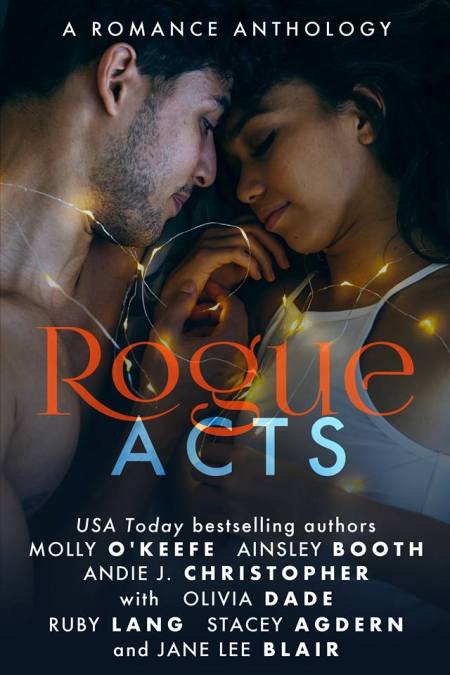
The Chicago Tribune had a nice article today on romance and resistance that includes the Rogue Affair cover and name drops yours truly. And Buzzfeed had a terrific piece last week on romance and politics too.
Is this a new trend in romance thinkpieces–well researched and thoughtful? One can hope!
In the piece, Pompeo makes an unapologetic case for why she’s the highest-paid actress in primetime–and of course it’s the kind of argument I’ve never heard an actor have to make. She’s remarkably clear eyed about her career and thoughtful about what it means to make art long-term and still keep your work exciting and meaningful.
The profile reminded me of my rewatch of the first three seasons of Grey’s Anatomy a few months ago. I continue to find it odd that Grey’s is often omitted from conversations about peak TV. It’s not included in Alan Sepinwall’s (admittedly still interesting) The Revolution Was Televised, for example. While Shonda Rhimes herself often gets shout outs as a powerful showrunner (see here), it’s often as if she’s interesting in spite of the television she makes not because of it.
My own history with Grey’s is complicated. I started watching during the second season, quit a few episodes into the fourth, and then got reeled in again during season six/early season seven.
I’m not watching it right now, and I definitely don’t think it’s a perfect show. But when it’s good, Grey’s can be so good. It can also fail and falter and be preachy and reductive and go to some wacky bad places. The romantic drama in the first 2.5 seasons, however, was top notch, and I want to talk about what I think the show does well.
If you’re in the area, I’m going to be on a panel about empowering heroines at the Virginia Beach Public Library Romance Reader Rendezvous on February 3. I’ll also have some books. Details are here, and I’d love to see you!
On social media and over email, I’ve fielded several questions about what someone should read to learn more about the space race. While writing the Fly Me to the Moon series, I’ve inhaled dozens and dozens of space histories. So for prosperity’s sake, here’s what I recommend.
A few caveats: my list is focused on the period between Sputnik and Apollo 11 (or 1957 to 1969) and on US/Soviet crewed space flight. If you’re interested in rocketry, for example, that would be a whole other list and it would start a lot sooner.
Also, I’m not a scientist or engineer. So while I’m interested in the history of technology, I prefer books pitched to a general audience.
I do have a PhD in American studies, so my bias is for new history that is intersectional, considers the economic and social factors that create institutions, and includes marginalized voices.
(This is a follow up about Star Crossed; you can read our first statement here.)
In the summer of 2014 when we started plotting the Fly Me to the Moon series, we penciled in a female/female romance about a would-be astronaut and a woman at the American Space Department. Much of the fiction and non-fiction about the space race is very masculine, very white, and very straight, and we didn’t want our fictional universe to replicate those exclusionary narratives. As we drafted the series and this specific story, we came to love to our heroines, Bev and Geri.
The day after releasing Star Crossed, we pulled the book because reviewers pointed out we’d deracinated Bev, who is African American, and given more weight to harassment and discrimination based on gender or sexual orientation than that based on race.
That wasn’t our intent, but intent isn’t enough. We spent eight months talking about and trying to revise Star Crossed, and while we made some progress, we have decided this isn’t our story to tell. We can fix the craft issues, but we can’t shake the feeling that for us to tell this story is narrative appropriation. We therefore have no plans to rerelease the book.
Note I don’t have a story in this one. I started three different novellas for it, and I just couldn’t click with any of them, so I’m taking a little break. But the seven stories here are awesome. I love the writers who’ve contributed to the series so much, and I love how all of the stories are about believing in the power of human relationships to overcome the awfulness in the world. They’re idealistic and hopeful and sexy and smart–and you should read them.
I want to recommend you consider watching a thing, a thing that I think has one of the most interesting romances on the small screen. Plus if you take me up on this, you’ll get to listen great classical music and consider artistic union-management politics. I have a lot of caveats as you’ll see below, but here’s the trailer for the forthcoming season.
Yes, I’m recommending Mozart in the Jungle, which is available on Amazon Prime. It’s a strange, quirky, and sometimes uneven comedy. As I’m certain my husband would want to interject, it’s not really funny, it gets some of the details wrong, and it traffics in some tropes and stereotypes that grate, but it’s still worth your time because it takes the clash between art and commerce seriously and it builds lovely human moments in along the way.
When it’s good, Mozart in the Jungle is different from everything else on television. And when it’s bad, at least it’s short. (Seriously, the episodes are less than half an hour each. You can pretty easily blow through a season in two nights and the extant three seasons in less than a week.)
Mozart in the Jungle tells the story of a fictional New York City orchestra. In the pilot episode, the board brings in a hot new conductor, roughly modeled on Gustavo Dudamel, to shake things up and in the process, deep schisms in the orchestra grow wider and the characters are forced to clarify their relationships to the institution and to music itself.
To be more granular, more romancelandia folks should take a look because of the show’s central relationship: a slow-burn romance between the new conductor, Rodrigo (Gael Garcia Bernal), and a struggling oboist named Hailey (Lola Kirk).
On paper, Hailey sounds a bit like a Manic Pixie Dream Girl. She’s much younger than the rest of the ensemble, she’s pretty, and she drives Rodrigo’s emotional development/arc. But the character is specifically written and sympathetically portrayed. She has an inner life and her own desires, and so, for me, she transcends the trope.
Most interestingly, at least from my perspective, Hailey struggles with the question of whether she’s talented enough to achieve her dreams and as a result, as the show marches on, she tries to reimagine her life and eventually takes up conducting.
I don’t know what will happen with this storyline, but if anything, I find the show the compelling because of the female characters: Hailey; her roommate, Lizzie; her friend the cellist/union rep, Cynthia; Hailey’s rival, the first chair oboist Betty; and the president of the orchestra board, Gloria. I like the men, but they aren’t as central for me.
Since Hailey’s story is basically the one I keep writing over and over and over again, I’m smitten with the show, and I can’t wait to finally, finally see Hailey and Rodrigo together as a couple. I couldn’t be more excited for the show’s upcoming fourth season, so you should catch up so we can squee together.
That’s my spoiler-free pitch, but I’ll make a longer and more complicated one after the break.
In the vein of this post from last year, here’s a list of things I really liked in 2017.
Music/Podcasts:
Natasha, Pierre, & the Great Comet of 1812, Broadway Soundtrack: while this show was on Broadway in 2016 and has since closed, I became obsessed with the soundtrack in 2017. Denee Benton’s voice is extraordinary and vulnerable, and the rest is a delightful mash up. Look for Russian themes in my upcoming work. /waggles eyebrows/
DAMN., Kendrick Lamar: timely, brilliant, and on constant rotation in my car.
Turn Out the Lights, Julien Baker: full disclosure, I didn’t love it quite as much as Sprained Ankle, but I can’t stop listening to it and “Appointments” is probably my song of the year.
Melodrama, Lorde: I didn’t like “Green Light” on the radio, but the album is an album, and much more than the sum of its parts. Perfect for writing heartbreak.
LA Divine, Cold War Kids: what do you know, people still write rock songs. The Bishop Briggs cameo is a highlight; she’s going to break out soon.

 Emma Barry