A Fine Romance Friday: That Thing You Do!

We haven’t had one of these in a while, have we? In the lead up to the release of Star Dust, I want to spotlight romantic movies set in the 1960s or produced in the 60s. First up is Tom Hanks’s (yes, that guy) music rom-com That Thing You Do! (1996).

I’ve had a soft-spot in my heart for this movie since I went on my first-ever dates to it. But a recent article at UPROXX reminded me how stinking charming it is. Our basic story: the drummer of a small-time band in 1964 Erie, PA, breaks his arm. A new guy (Tom Everett Scott) steps in, convinces them to make their big song more up-tempo, and the next thing they know, they’re in possession of a hit record and a recording contract. The band’s handsome front man (Johnathan Scheach) treats his girlfriend (Liv Tyler) like crap, so when the band inevitably falls apart weeks later, we cheer when his girlfriend and the new drummer ride off into the sunset together.

It’s an insubstantial confection of a movie, but it works because of the pitch-perfect recreation of the 60s. The sets, the costumes, and above all the music, are perfection. There is the catchy as hell title track, but I also like the slow-dance B-side “All My Only Dreams.” The entire soundtrack (which I own) is a 60s sound-alike wonder. The movie also gets the sheer fantasticalness of success right. The scene in which the band plays a fictional version of The Ed Sullivan Show is just joyful. We know it can’t last; we don’t really want it to. But gosh, it’s a fun ride.

In terms of the romance, Liv Tyler has never been lovelier on screen than she is here. And Tom Everett Scott is delightful and kind; the absolute best version of a beta hero. When they finally confess their feelings (and share one hell of a kiss) it has more of a jolt than you’d expect from something this frothy.

That Thing You Do! is an amuse bouche for your ears and a lovely invocation of the 60s. I commend it to you tonight.

Odds and Ends

On Wednesday, I chatted with up-and-coming author Cobie Daniels for her romance writing podcast. The episode is out now and you can listen to it here. I sort of hate how my voice sounds on tape so I haven’t been able to get myself to listen to it; can someone tell me if I said anything mortifying? You should definitely listen to episode 4, which is a fascinating conversation with Zoe York. And I’ll be tuning in from here on out to hear about Cobie’s editing/publishing journey.

Also, Star Dust received its first review earlier this week (and I love those astronaut wives and boozy bridge parties, let me tell you). I cannot wait for this book to be out!

Toward a Definition of Historical Fiction

If you follow me on social media, or read this blog, or have been within half a mile of me recently, I probably mentioned to you that I have a book coming out in October that I wrote with Genevieve Turner: Star Dust. It’s primarily set in 1962 during a fictional version of the space race. But is it a historical romance?

In the category definitions for the annual RITA Awards, the Romance Writers of America (RWA) limits the designation of historical romance to those set before 1950. Wikipedia offers the following paragraph in a discussion of definitions in historical fiction:

Definitions vary as to what constitutes an historical novel. On the one hand The Historical Novel Society defines the genre as works “written at least fifty years after the events described”,[2] whilst on the other hand critic Sarah Johnson delineates such novels as “set before the middle of the last [20th] century […] in which the author is writing from research rather than personal experience.”[3] Then again Lynda Adamson, in her preface to the bibliographic reference work World Historical Fiction, states that while a “generally accepted definition” for the historical novel is a novel “about a time period at least 25 years before it was written”, she also suggests that some people read novels written in the past, like those of Jane Austen (1775–1817), as if they were historical novels.[4]

While writers’ organizations and scholars disagree, then, the rule seems to be that historical fiction is removed significantly from the present (perhaps 25 to 50 years at minimum) and from the writer’s personal experience. So “historical” requires temporal and experiential distance. But how much distance is necessary? And what does that distance get you?

I’ve been wondering about this while watching and rewatching Mad Men (1960 – 1970), The Americans (early to mid-1980s), Narcos (late 1970s through, presumably, the early 1990s), and Miss Fisher’s Murder Mysteries (1920s with some earlier flashbacks). RWA and The Historical Novel Society would call only Miss Fisher’s historical; the rest would be contemporary.

Except the approach in all of these shows doesn’t feel contemporary to me. The temporal remove is so important that these stories could not be told without material alteration if they were set in another place or time. So I would argue that a historical novel is one in which the settings calls attention to itself through emphasis on the differences between our contemporary world and the world of the narrative’s fashion, social mores, technology, legal or economic structure, etc. In a historical novel, the temporal remove itself is one of the subjects.

Now I’ll grant that some distance is necessary for this to be true. Have you ever had the experience of looking at a picture and realizing how “of the moment” you look in it, even when (at the time the photo was taken) you couldn’t see how the cut of those pants or the pattern on that shirt or the style of those glasses reflected trends? Give it a few years and poof, you can see style in a way that was invisible.

I’m suggesting that a writer could successfully meet my standard in a novel set in the 1990s or even the early 2000s and even when s/he is writing out of lived experience. To wit, I’m excited about this collection and Rainbow Rowell’s popular YA romance Eleanor & Park was broadly considered historical despite (or perhaps because of) its 1980s setting.

In the last analysis, historical writing seems to be defined by its thick setting and orientation toward that setting more than by its use of dates and research.

Now I’m not arguing that RWA should adopt this definition. It would clearly be unworkable for something like the RITA. But when I label Star Dust historical, that’s what I mean.

What do you think? How would you define historical fiction?

Star Dust: Opening Chapter

So you’ve seen the cover for Star Dust. It’s gorgeous and it’s about astronauts and so far so good–but what does a space-race romance really look like? Well, I’ve got the prologue and part of the opening chapter for you.

Be advised that there are a couple of adult words, a Soviet satellite, and a dangerous level of chemistry between a pair of unlikely neighbors.

Continue reading “Star Dust: Opening Chapter”

Cover Reveal: Star Dust

As promised, here is the cover for Star Dust.

cover for Star Dust. The text reads: Star Dust, Emma Barry and Genevieve Turner. It shows a couple embracing in front of the Milky Way star field.

The cover designer was none other than my amazing critique partner and co-writer Genevieve Turner (did I mention that she’s amazing?). But maybe it’s even better with a blurb:

Houston, 1962
Anne-Marie Smith wanted normal: a loving husband, two beautiful kids, and a well-kept house. But when she catches her husband cheating, she decides that normal isn’t worth it. Now in a new city with a new job, she’s trying to find her new normal—but she knows it doesn’t include the sexy playboy astronaut next door.

Commander Kit Campbell has a taste for fast: fast cars, fast planes, and even faster women. But no ride he’s ever taken will be as fast as the one he’s taking into orbit. He’s willing to put up with the prying adoration of an entire country if it will get him into space.

But Anne-Marie and Kit’s inconvenient attraction threatens both normal and fast. As the space race heats up, his ambitions and their connection collide and combustion threatens their plans… and their hearts.

The book is available for preorder at Amazon, iBooks, and Kobo (more links coming soon!). You can also add it to your Goodreads shelves, join the mailing list for the Fly Me to the Moon series, or check out the book’s Pinterest board.

I’ll put up an excerpt later today (ETA: you can now read the prologue/first chapter), but in the meantime, I can’t tell you how excited I am for the book’s release in October!

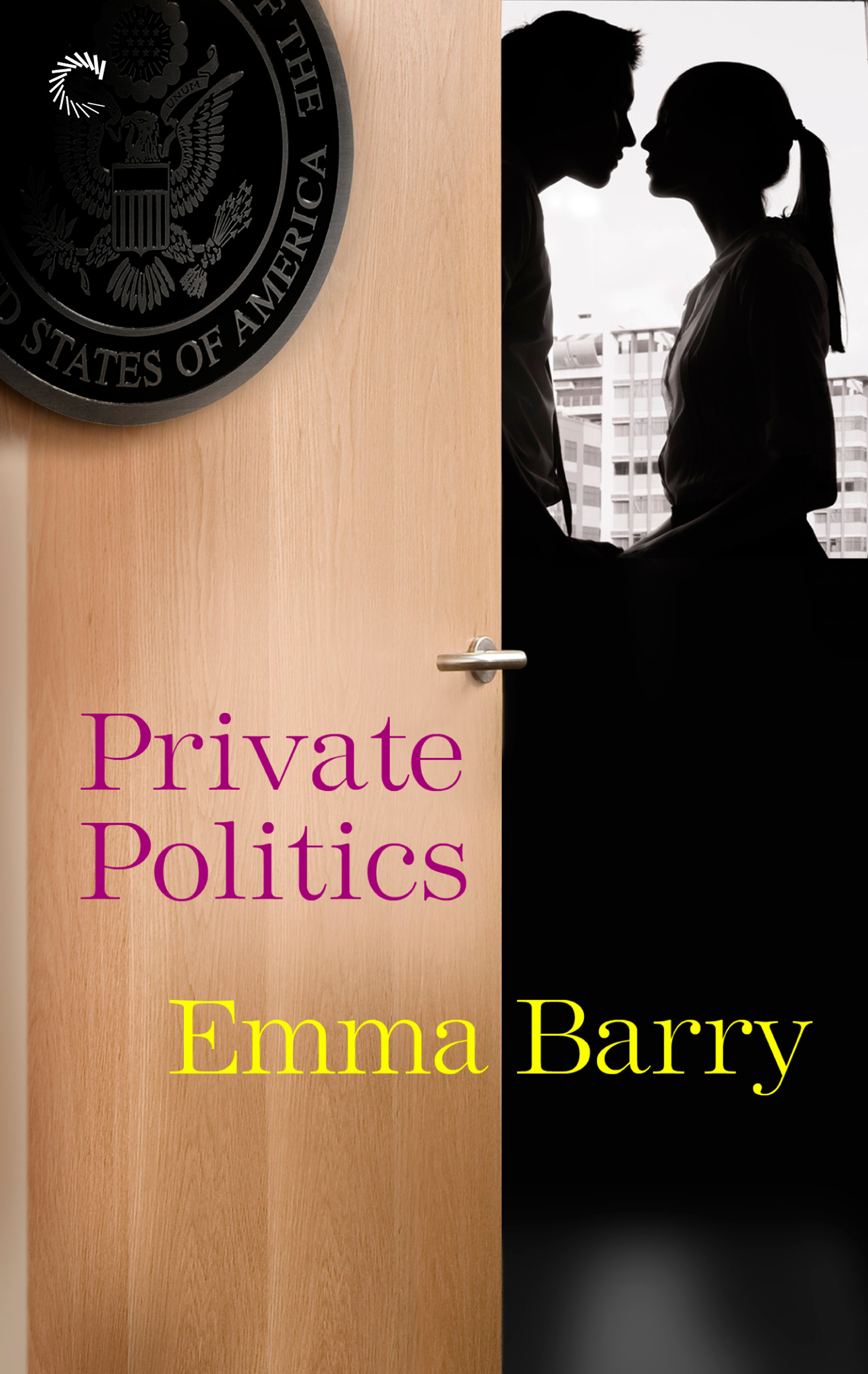
Happy Book Birthday, Private Politics!

book cover reading

One year ago, Liam and Alyse’s story stepped out into the world. An author probably shouldn’t choose favorites, but Liam is my favorite hero I’ve written: he’s smart, enthusiastic, and cuddly. He loves Alyse’s ambition and he wants to help her get what she wants on her terms. He’s not a pushover, and when Alyse takes advantage, he protects himself. But he wants a partner not a doormat.

Here are my top five Liam moments:

  1. He’s self depreciating: “He sat up a little straighter and pushed his shoulders back. After all, if she was going to look at him, really look at him, for the first time maybe ever, he might as well try to maximize his assets. Such as they were. Never mind, he had no assets, which was the problem, but still, he wanted to look like someone she could trust.” (Kindle Locations 323-325)
  2. He’s crazy into Alyse: “She shifted against him and the fantasy faded. It wasn’t like he needed a story to make this moment meaningful. Alyse, in his arms, wanting to be there, was enough. He was so far gone for her it wasn’t even funny.” (Kindle Locations 621-623)
  3. He loves his grandma: “… his mother had chosen a picture of him with his arm around his grandmother taken about a year prior. She’d cropped the image, but you could still see the edge of a little gray head at his shoulder. Not understated, that. She’d probably barely restrained herself from adding a caption, ‘And he loves family.’ At least he was laughing. At least he looked like himself, relaxed and a bit sloppy. No false advertising here. Well, he did like family. He wasn’t ashamed.” (Kindle Locations 697-701)
  4. He’s into long, lingering glances: “One block became another. Their bodies swayed as the cab jolted over the District’s bumpy streets, but neither of them looked away. If only for tonight, if only because she was scared, he might have a shot with her. It might be taking advantage. It was certainly stupid. It wasn’t personal, he knew it wasn’t personal, but it might be enough to be present. For tonight at least, she might be open to it, open to him.” (Kindle Locations 1136-1139).
  5.  When he finally goes for it, he’s absurdly hot:”In an exhalation more breath than voice, he urged, ‘Tell me what you want.’

    That was all? Then he’d do it?

    ‘Kiss me.’ Her voice was husky, needy and desperate. Damn transparent voice. Still he didn’t move.

    ‘Say my name.’

    She trembled. ‘Liam, kiss me.'” (Kindle Locations 1618-1620)

Don’t worry–he does!

If you need a dependable, sweet, cuddly new book boyfriend, check out Private Politics.

Coming Soon

image/text promo for Star Dust. it reads: dukes have curricles. bad boys have motorcycles. these guys have big rockets.

Star Dust is the project Genevieve Turner and I have been working on for a while. It’s with the copy editor and we’re very excited about it. We don’t have a definite release date, but we’re shooting for early October.

If you want to be the first to know when Star Dust is live, you can sign up for the Fly Me to the Moon mailing list. And if you want a sneak peek, check out the book’s Pinterest board.