

I am massively, incredibly, inexpressibly grateful to everyone who made Bad Reputation‘s release so special. I published my first book a decade ago, and I’ve never had a new release get so much attention or had so many people sample the book. It’s been so much–and so lovely–and I’m feeling a little weepy just thinking about it.
This collage features only a fraction of the posts I was tagged in (!!). The folks at Over the River Publicity and Amazon Publishing did such an incredible job of getting it into people’s hands. If you bought the book or reviewed it or posted about it or boosted my posts about it, in the most sincere way: I adore you. Thank you.
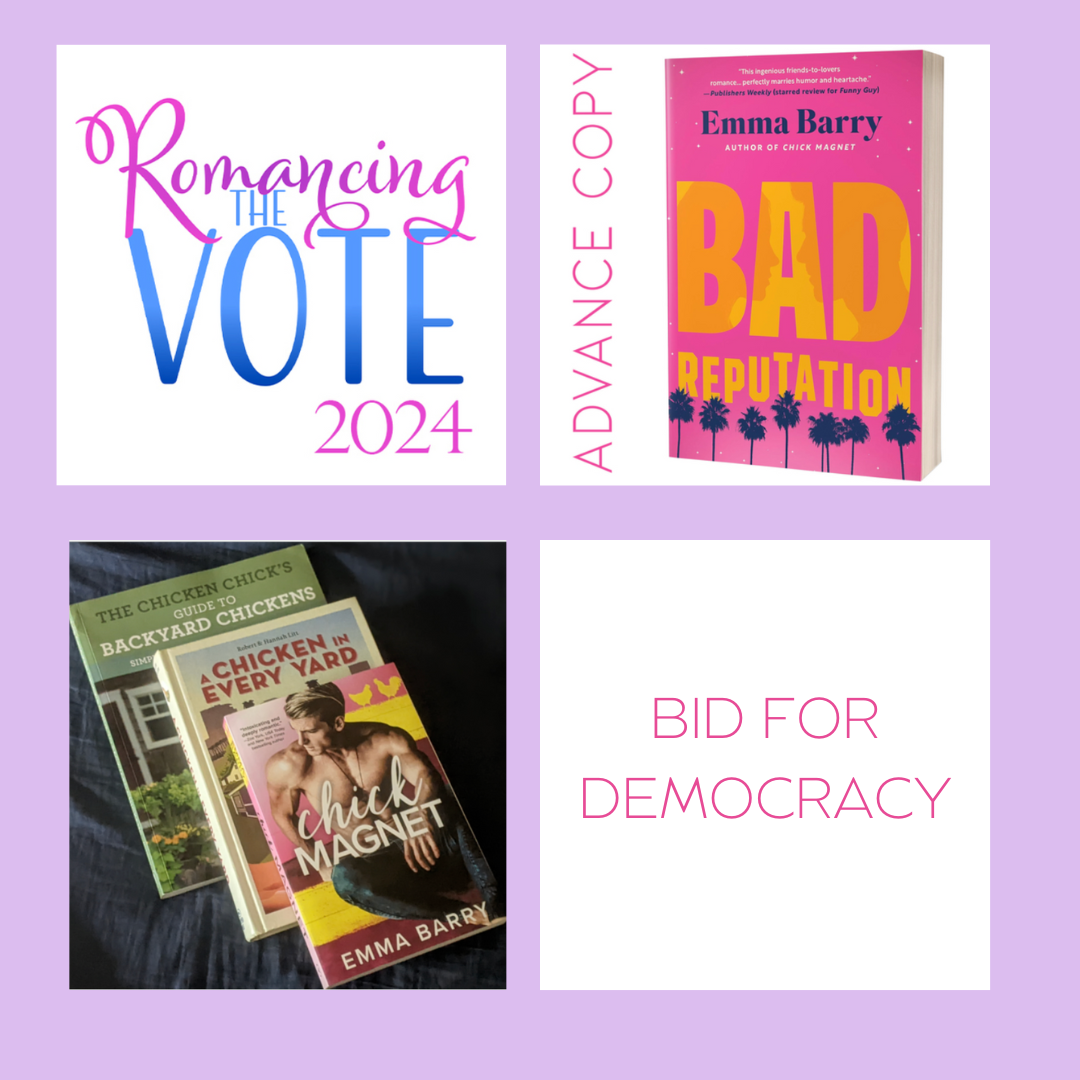
I also wanted to let you know about two different charity projects to which I’ve made donations, both to support recovery efforts from Hurricane Helene in the Appalachia region. The first is the Romance for Appalachia Raffle. For every $5 you donate, you get one entry into a random drawing. The list of prizes is voluminous and amazing, and it includes a signed paperback of Bad Reputation. The drawing will be held on Oct 13, so get donating!
The second is Western North Carolina Charity Auction, which will be held between Oct 18 and 20. The auction site isn’t available yet, but I’ve donated a set of signed books, including Chick Magnet, Funny Guy, and Bad Reputation, plus an ARC of Bold Moves. This is the first ARC that I’ve promised anyone, and I’ll get it into your hands as soon as I can (after I receive it, probably early in 2025).
But speaking of hurricanes, because of Hurricane Milton, we’ve had to postpone the Oct 8 virtual event with The New Romantics (which is located in Florida). Stay safe from the approaching storm, everyone, and we’ll try to get that rescheduled soon.




 Emma Barry